
Coconut shell
The hard shell is an established local feedstock for charcoal.
Concern about smoke from coconut shell charcoal production led DMCBiochar to explore how local producers could make better use of coconut shell and other agricultural residues.
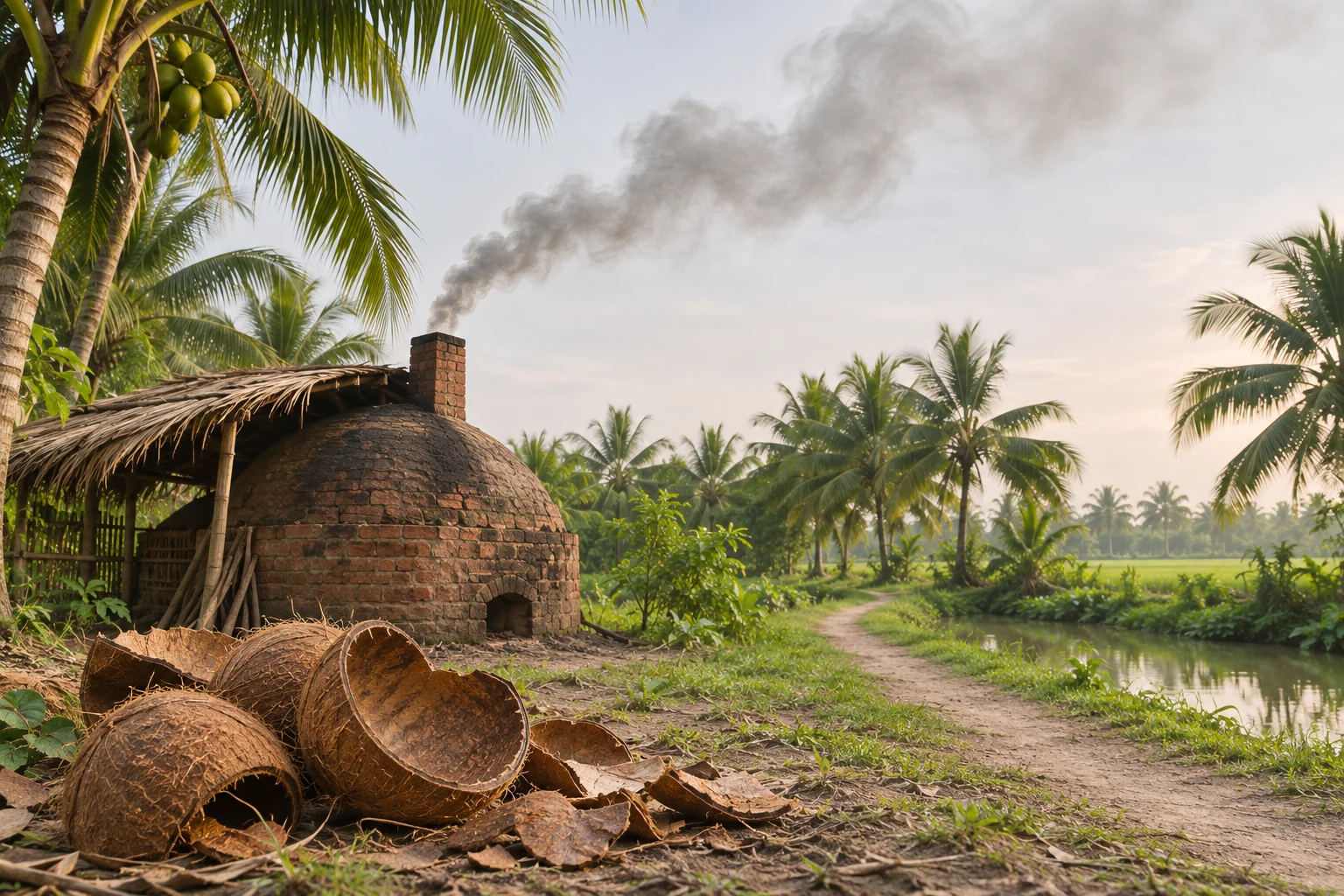
DMCBiochar started with two questions. How could local producers make better use of coconut shell, and how could they manage smoke from charcoal production?
The team studied how heat enters the kiln, how vapours and gases leave it, and how useful products can be recovered. The work began with coconut shell and grew to include other residues from processing agricultural crops.
See the feedstocksEach residue calls for different preparation and testing. The choice also depends on the intended use of the resulting char.
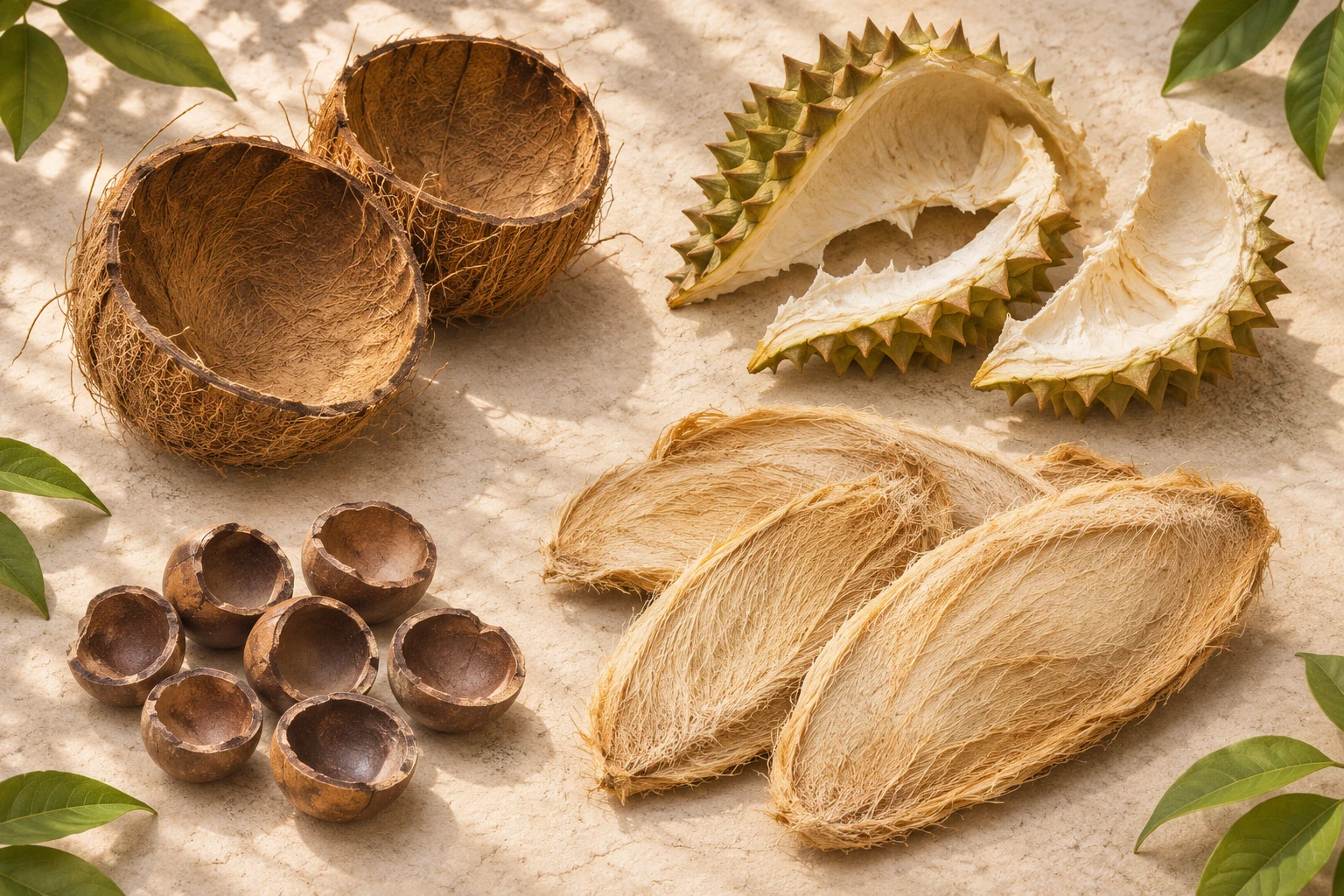
The hard shell is an established local feedstock for charcoal.
The thick husk left after processing is collected and prepared for trials.
Testing helps determine how to process the hard shell and assess the resulting material.
The seed left after fruit processing is another feedstock for investigation and sample analysis.
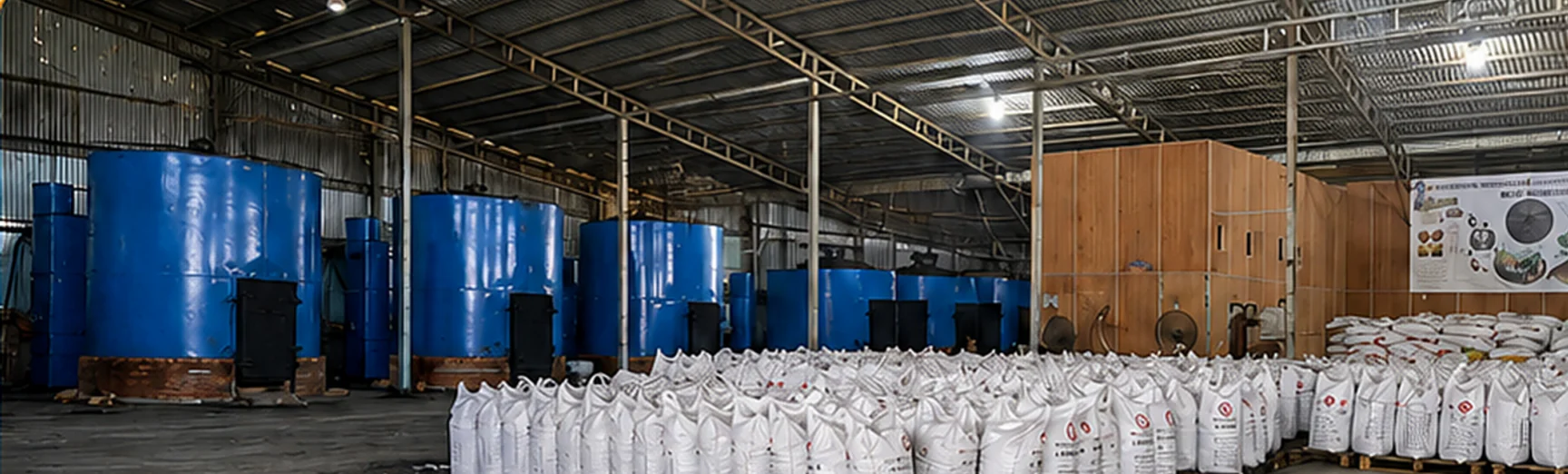
Each kiln design gave the team another way to test heat transfer and product recovery. The company profile documents the main changes.
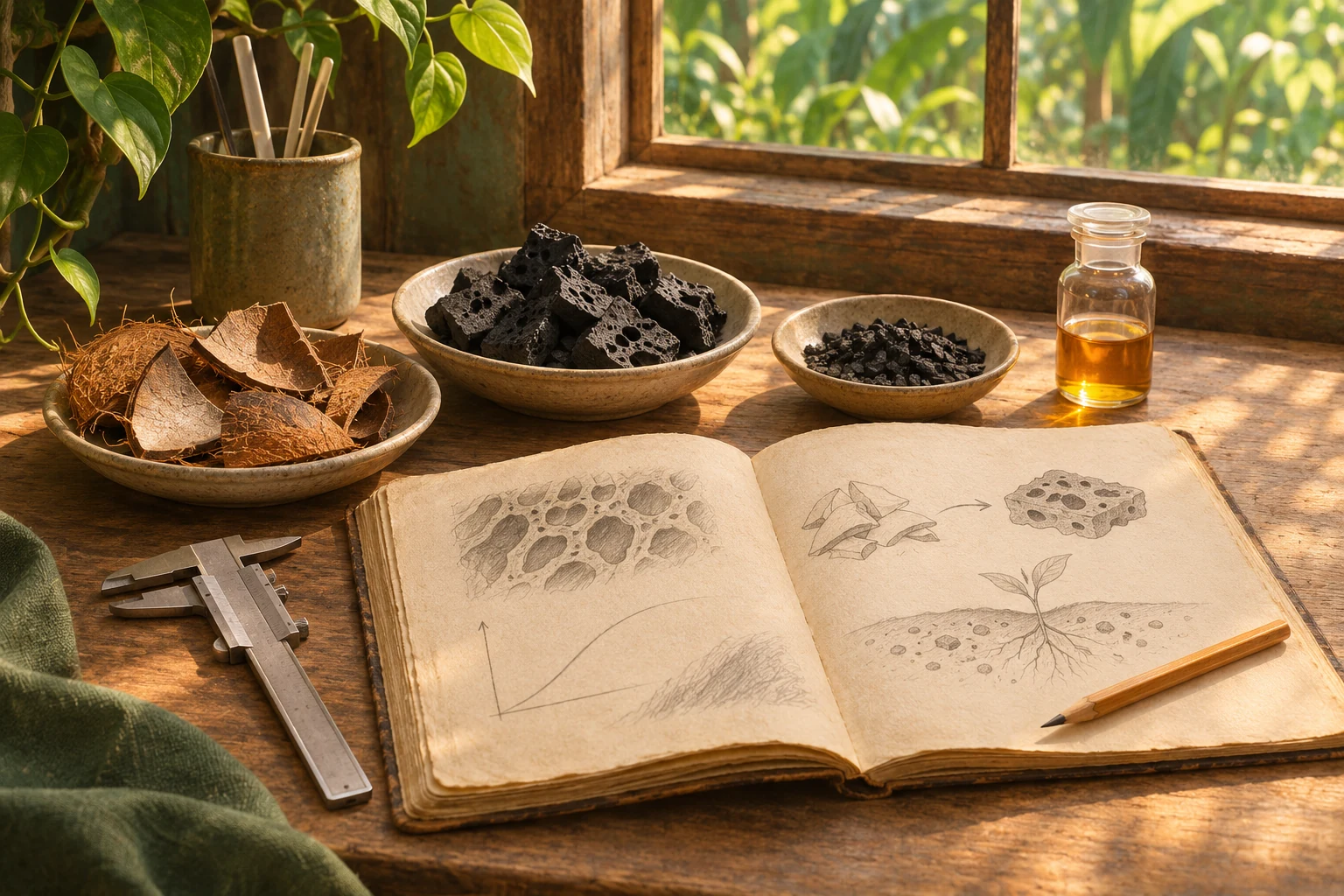
DMCBiochar began testing how heat could transform biomass in a drum kiln.
A square kiln allowed further pyrolysis testing under operating conditions.
Improvements to the vertical kiln expanded the work to products recovered alongside charcoal.
Duong Gia Ben Tre Joint Stock Company was established to support production, partnerships and continued development.
The team continued to refine the technology for different feedstocks and production conditions.
DMCBiochar won first prize in Group B at the 12th Green Startup Competition.
DMCBiochar Company Profile 2026, page 3.
The kiln heats biomass indirectly. It recovers solid char and condensed liquids, then returns combustible gas to supply process heat.
Assess the feedstock’s moisture, size, preparation and intended output. Coconut shell, durian husk, macadamia shell and mango seed have different properties.
Heat passes through the kiln walls and floor into the biomass chamber. The chamber limits the oxygen available during pyrolysis.
The solid output is char. Cooling part of the vapour produces liquids, including bio-oil and wood vinegar. Each stream is handled and assessed for its intended use.
The system routes non-condensable combustible gas back to the heating chamber after condensation.
Equipment and operating conditions depend on the project.
Exhaust from the heating chamber passes through a treatment unit before discharge. Monitoring at Branch 3 records results for the parameters measured in samples taken on 26 December 2025.
The intended use determines how buyers should compare the material, its test results and the grade offered.
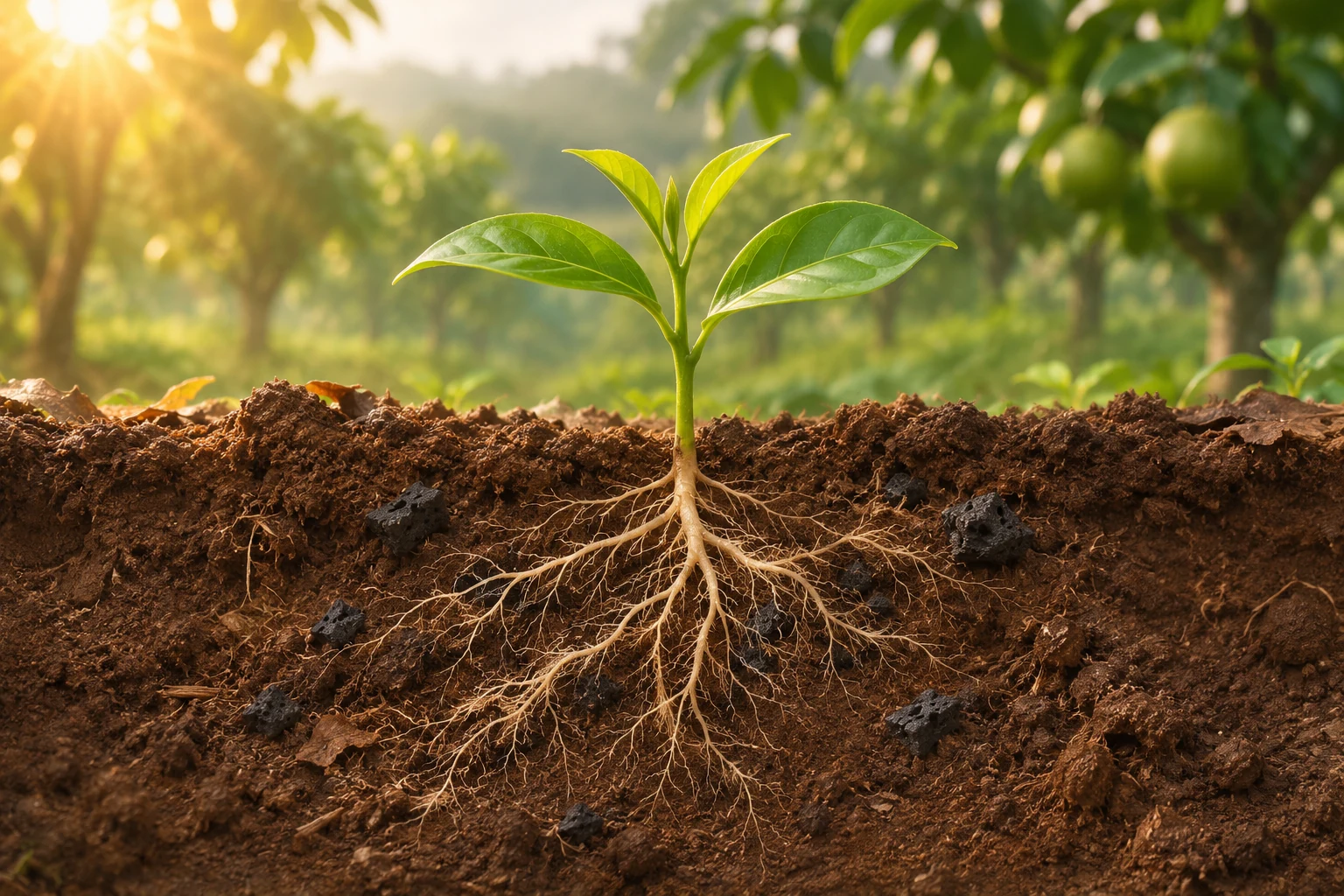
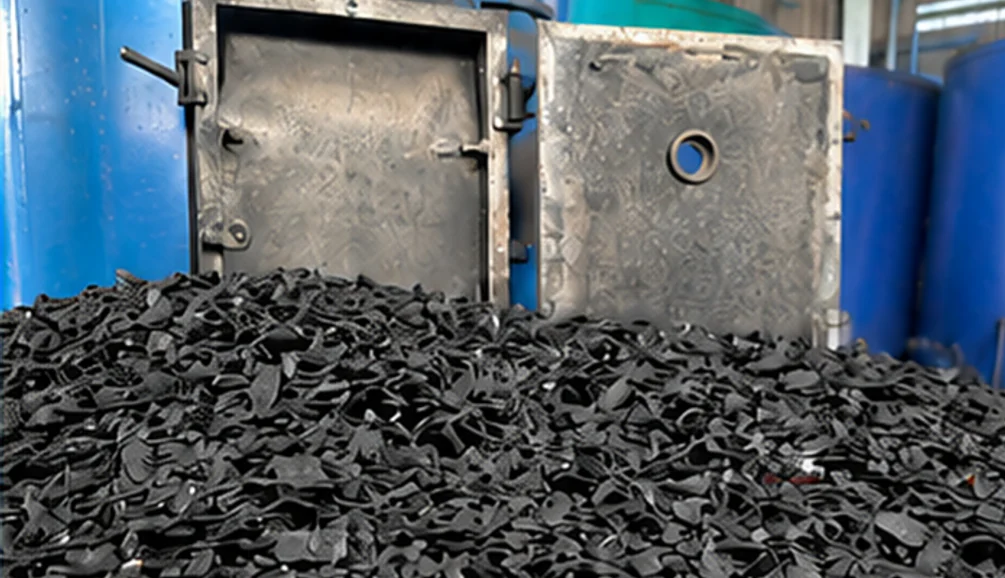
Suitable biochar can help some soils retain moisture or nutrients. Selection depends on the soil, crop and the properties of the material or blend.
Export buyers can request bagging and size requirements along with the grade and test certificate for a proposed lot.
Pyrolysis vapours can be condensed and separated. Assess each recovered liquid for the proposed use.
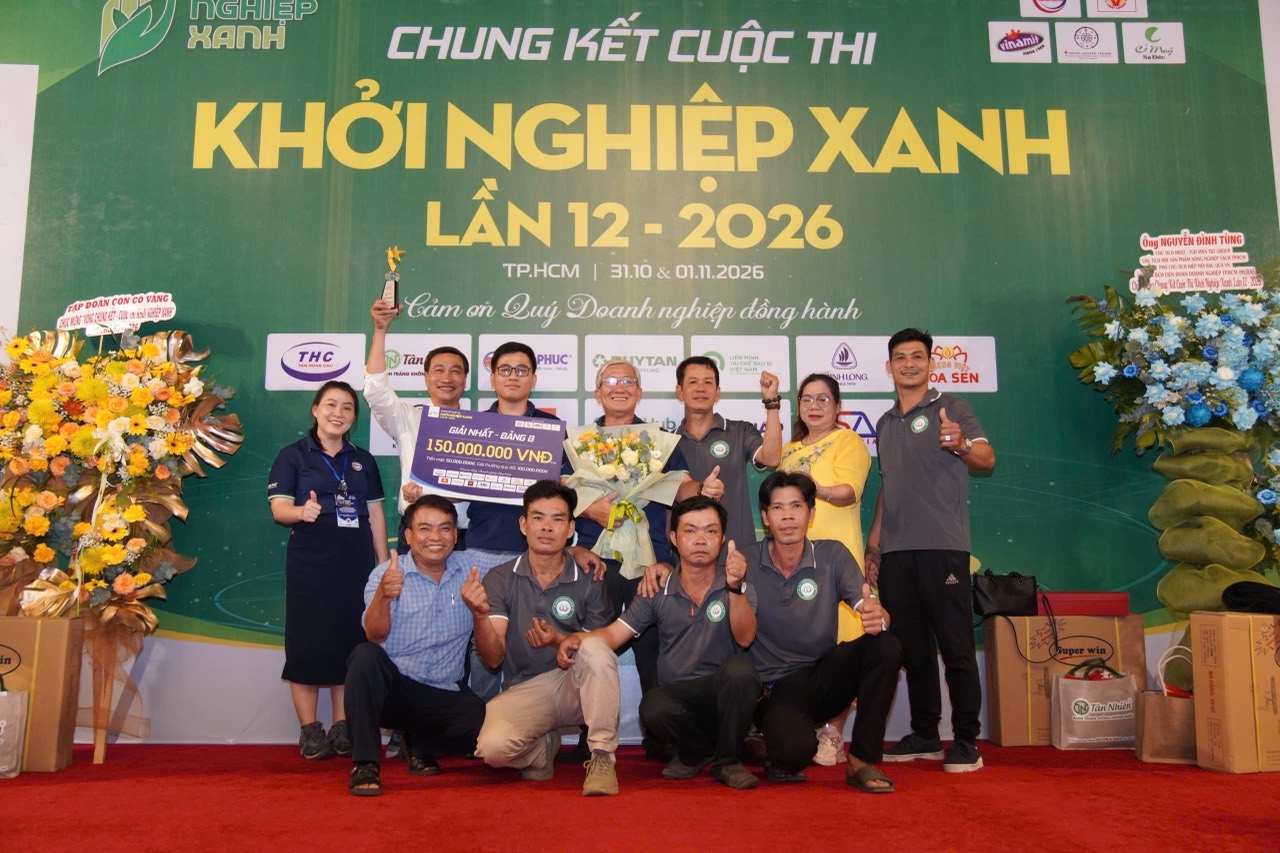
The award recognised the project that began with drum kiln trials in 2020 and developed into a recirculating pyrolysis system.
Read about the award
DMCBiochar reports submitting applications for a patent and an industrial design in Vietnam.
View supporting recordsSee the kiln systems, discuss feedstock preparation and review samples with the DMCBiochar team.
See company activities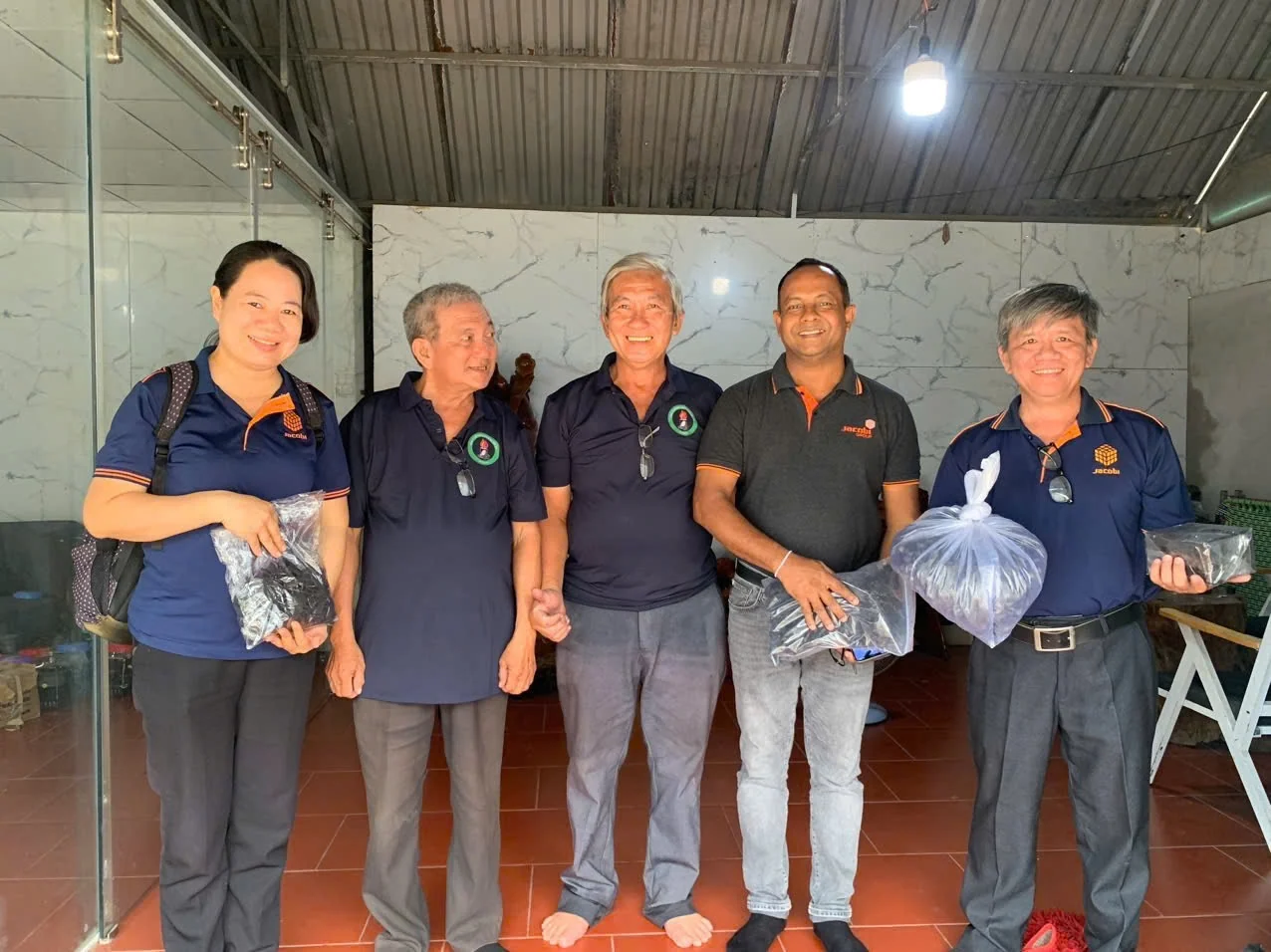
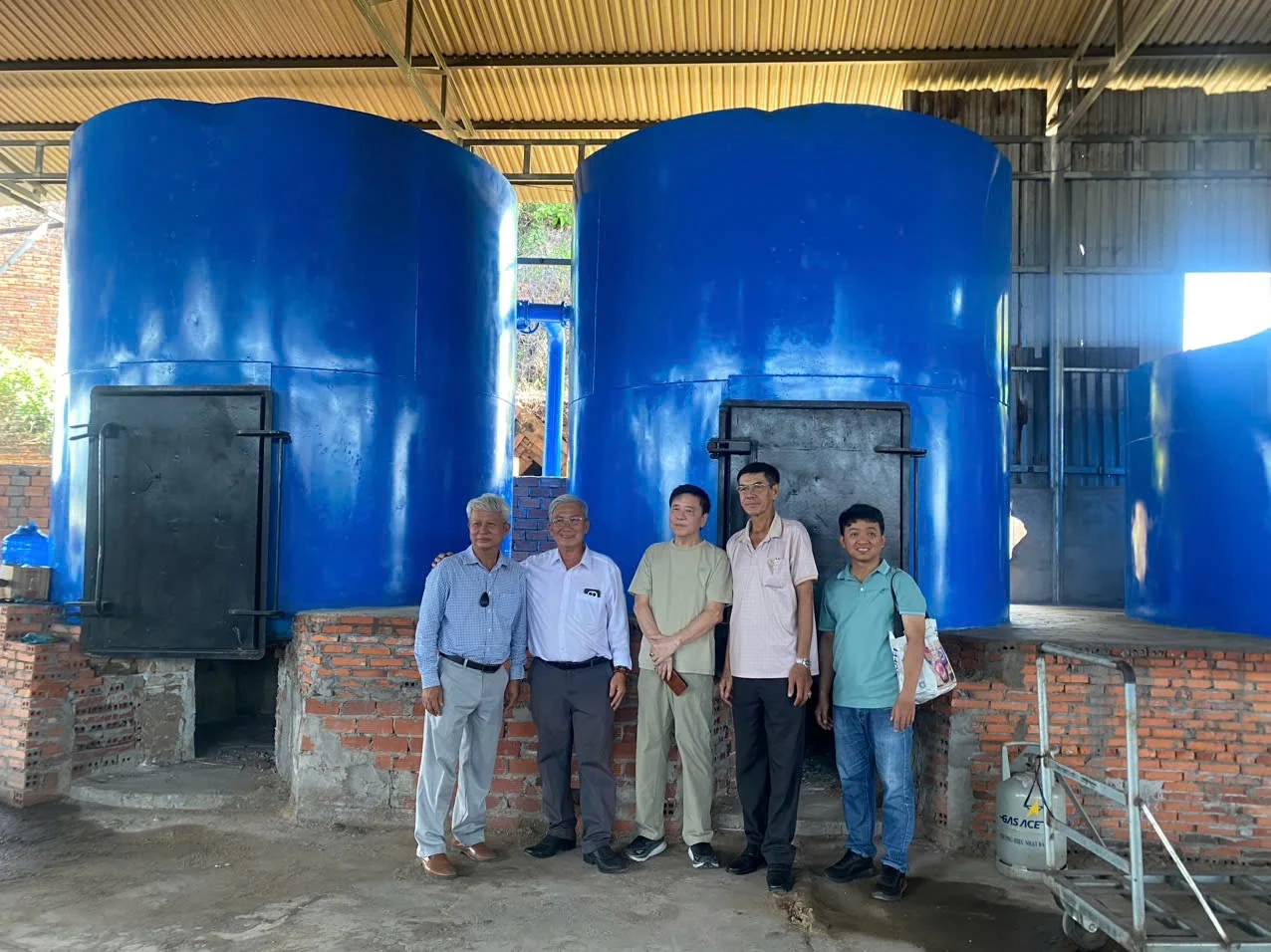
DMCBiochar is developing products for agriculture and documenting how biochar is made and used.
Blending biochar with vermicompost can contribute porosity and organic matter. Use the product instructions alongside the needs of the soil and the crop.
See biochar soil products
A project starts by tracing biomass, recording production and documenting where the biochar is used. Credit issuance requires an applicable methodology, supporting measurements and independent verification.
Tell us where the biomass comes from, how much you have and which product or application you are considering.
 Contact